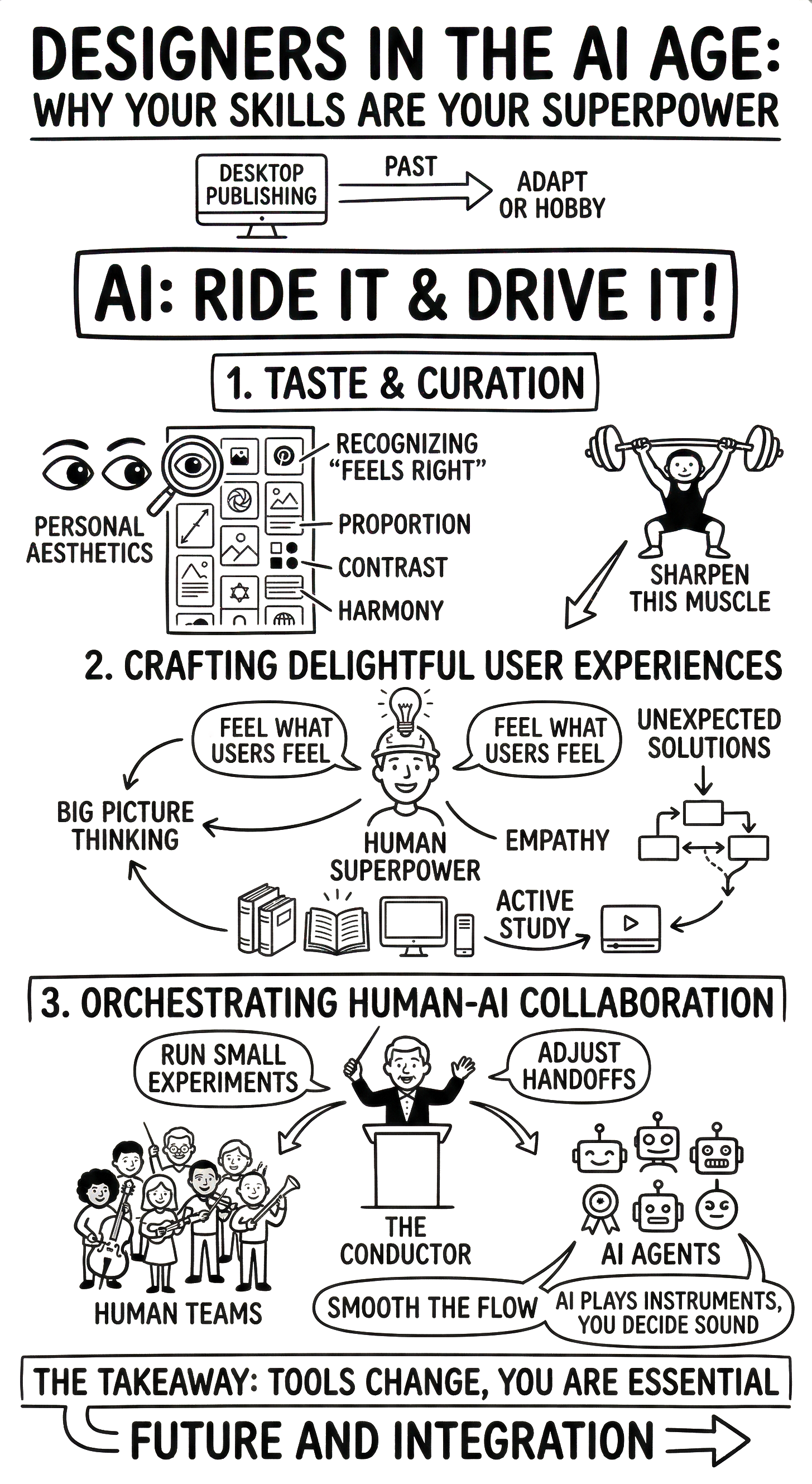
Designers in the AI Age: Why your skills are your superpower.
by Chipp Walters, April 2026
A few weeks ago, I had lunch with a friend, a brilliant retired designer. He told me about a lecture where he asked the room, “How many of you think using AI is unethical and you’ll never do it?” Half the hands went up. He looked at them and said, “Then design is now your hobby. The other half will outpace you on speed, cost, and quality.”
We’ve seen this movie before. When desktop publishing arrived, a lot of designers called it a toy. Those who refused to adapt lost their jobs.
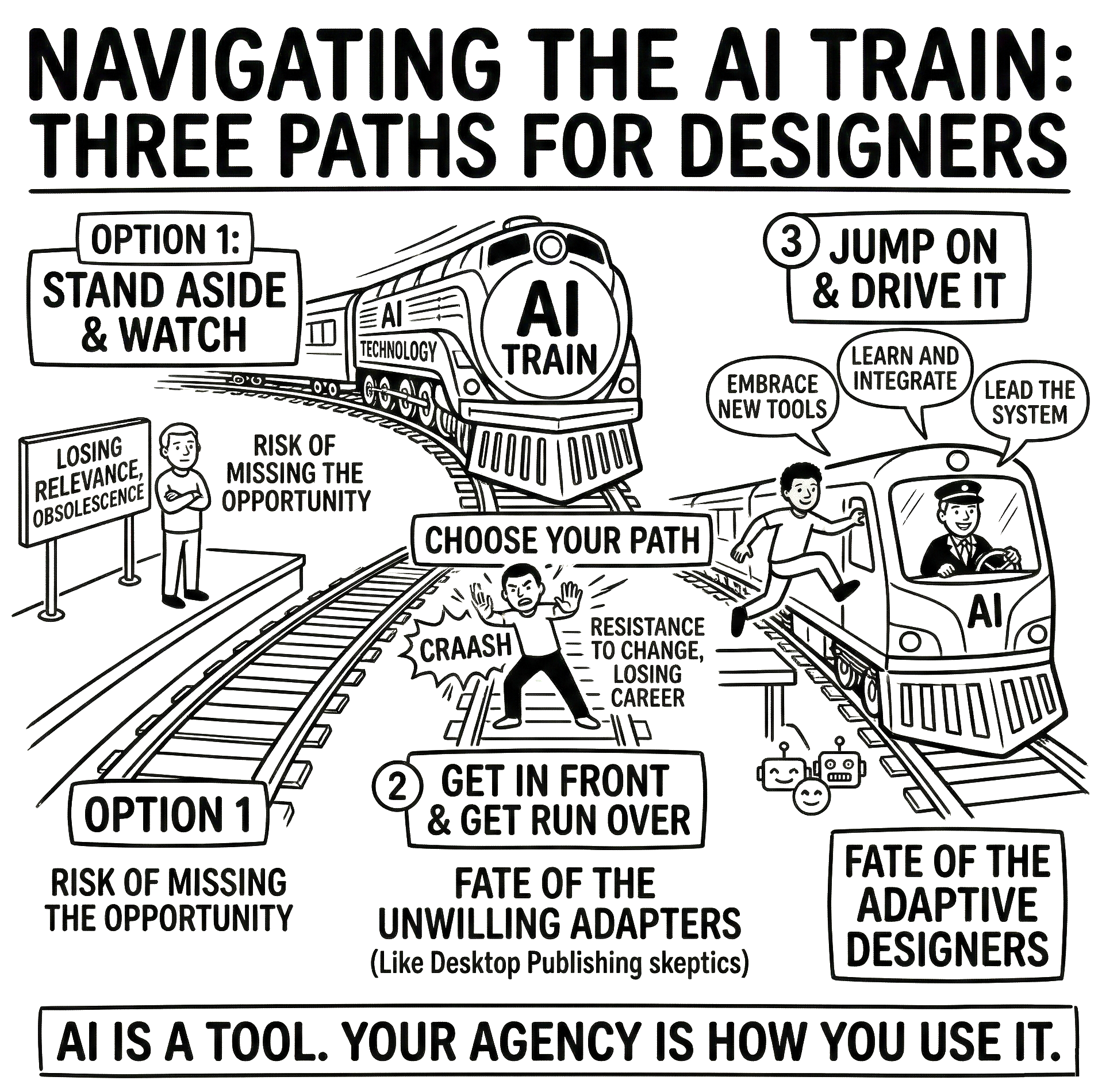
Today the AI train is barreling down the track. You’ve got three choices: stand in front of it and get run over, step aside and watch it pass, or jump on board and ride it. Which one are you choosing?
Alright, let’s say you’ve decided to jump on. Great. But the scenery is changing so fast it’s easy to feel overwhelmed. New tools pop up every week, and trying to keep up with all of it is exhausting.
The smarter play? Stop obsessing over the latest AI toy and instead sharpen the skills that actually matter — the ones AI still needs you for.
1. Taste and Curation
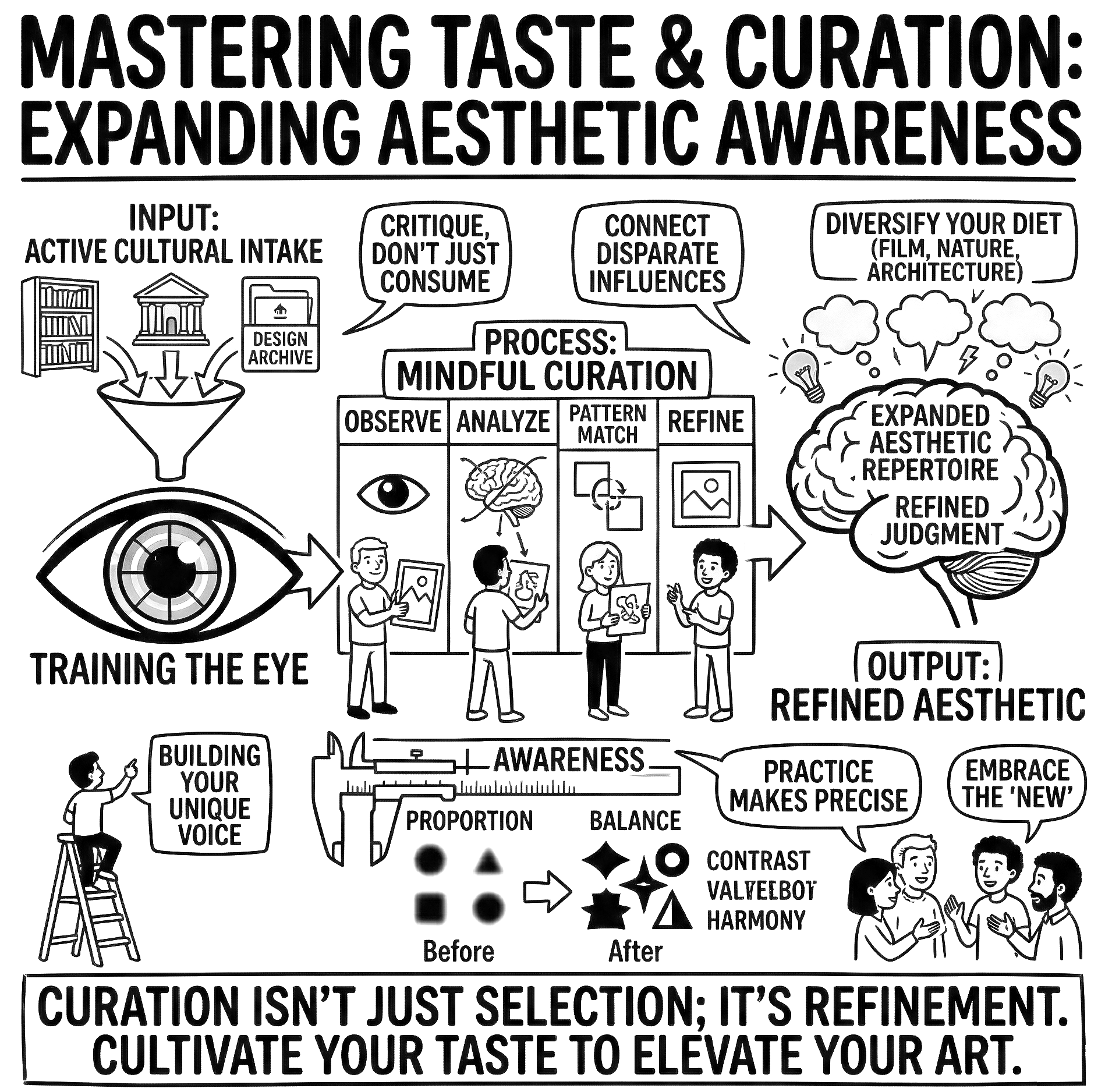
AI can spit out fifty decent options in seconds, but it can’t tell you which one actually feels right. That’s your job.
You don’t need AI to sharpen this muscle. Build your own Pinterest boards of work you love. Every time you pin something, pause and ask yourself: What exactly makes me like this? The proportion, the contrast, the unexpected color harmony? You’re training your personal sense of aesthetics — the same way you’d sharpen a knife or build muscle in the weight room. The more you do it, the more your aesthetic judgment becomes uniquely yours. That taste is not easily transferred to other people, and definitely not to an AI.
2. Crafting Delightful User Experiences
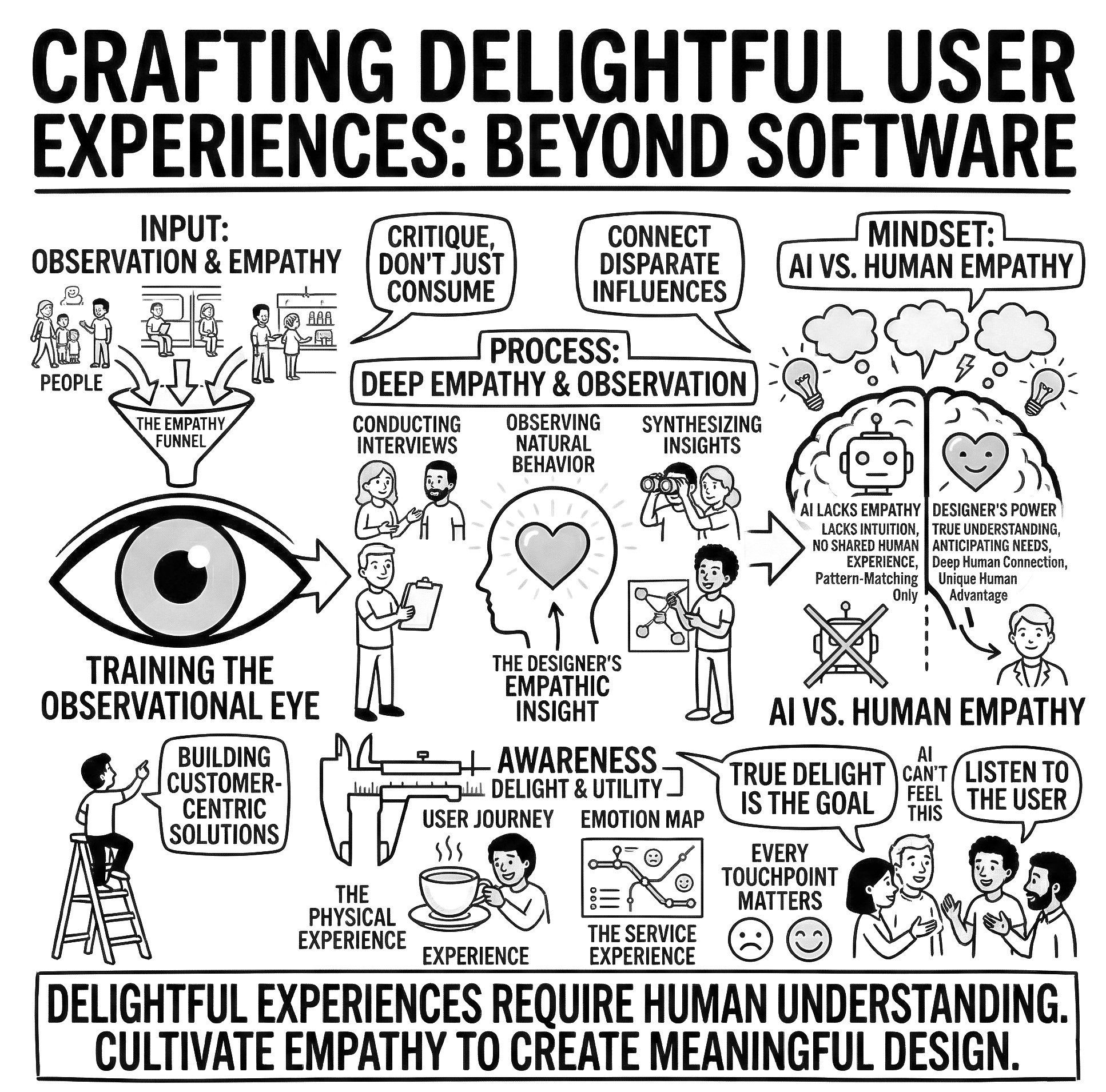
While you can sharpen your aesthetic eye with Pinterest boards, you can sharpen your UX instincts the same way — by actively studying great user experiences. Watch how people actually use apps and websites, read the classic books, dig into case study videos. The more you absorb, the sharper your instincts become.
Because as a designer, you naturally see the big picture. You can sit back, look at a flow, and brainstorm completely unexpected, out-of-the-box solutions that an AI — stuck in its training data — would never think of. That ability to feel what users feel and then invent delightful new experiences? Still very much a human superpower.
3. Orchestrating Human-AI Collaboration
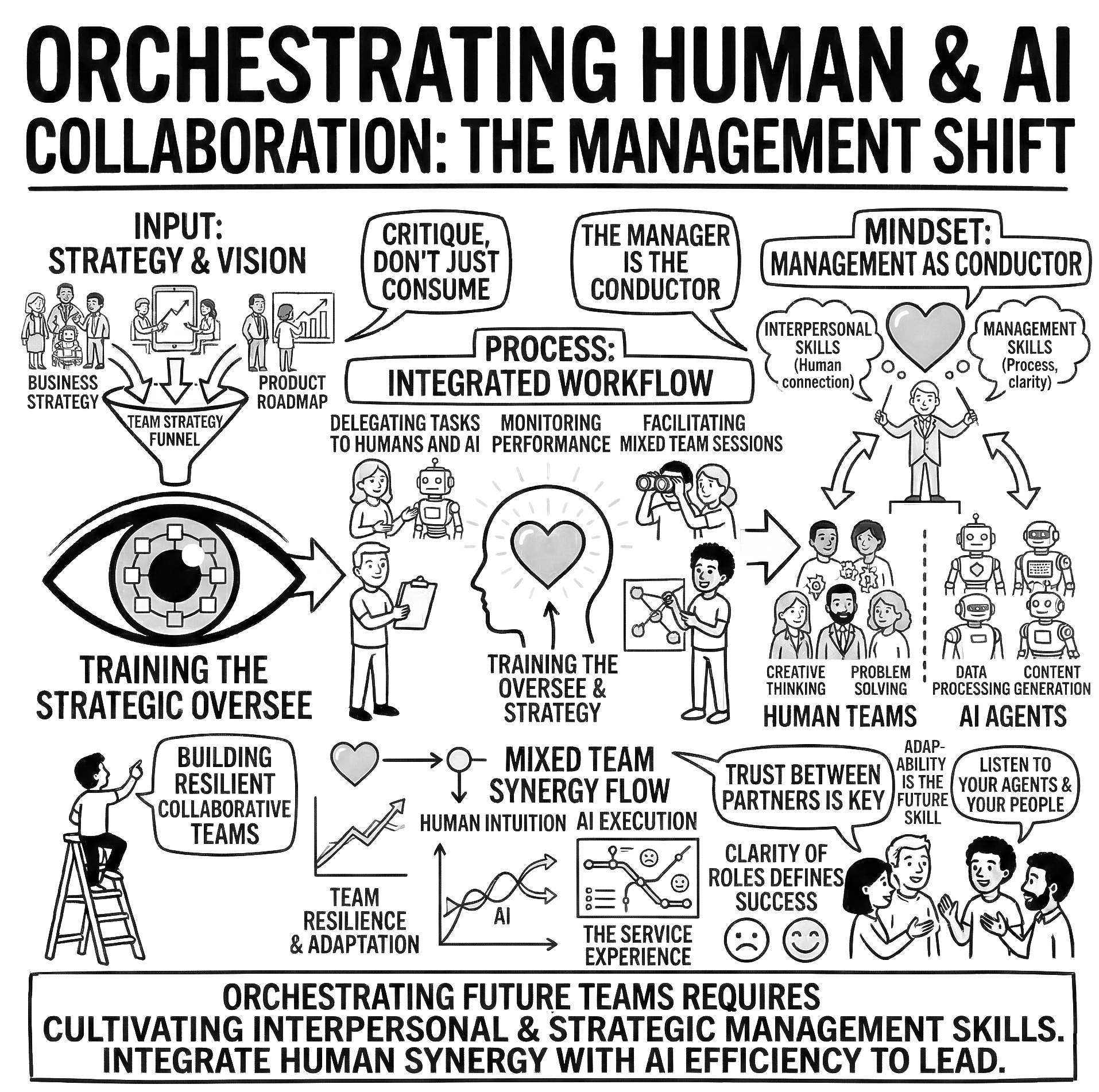
This is about managing teams of people and teams of AI agents like a conductor with an orchestra — making sure everything runs efficiently, calmly, and stays focused on the end goal.
The best way to polish this skill? Run small experiments. Pick one task in your workflow — research, brainstorming, wireframing — and deliberately split it between yourself and a few AI agents. Notice what feels smooth and what feels clunky. Then adjust the handoffs, the prompts, and the roles until the whole system flows naturally.
The more you practice conducting that orchestra, the better you get at it. AI can play the instruments. You’re the one who decides how the music should sound.
The Takeaway
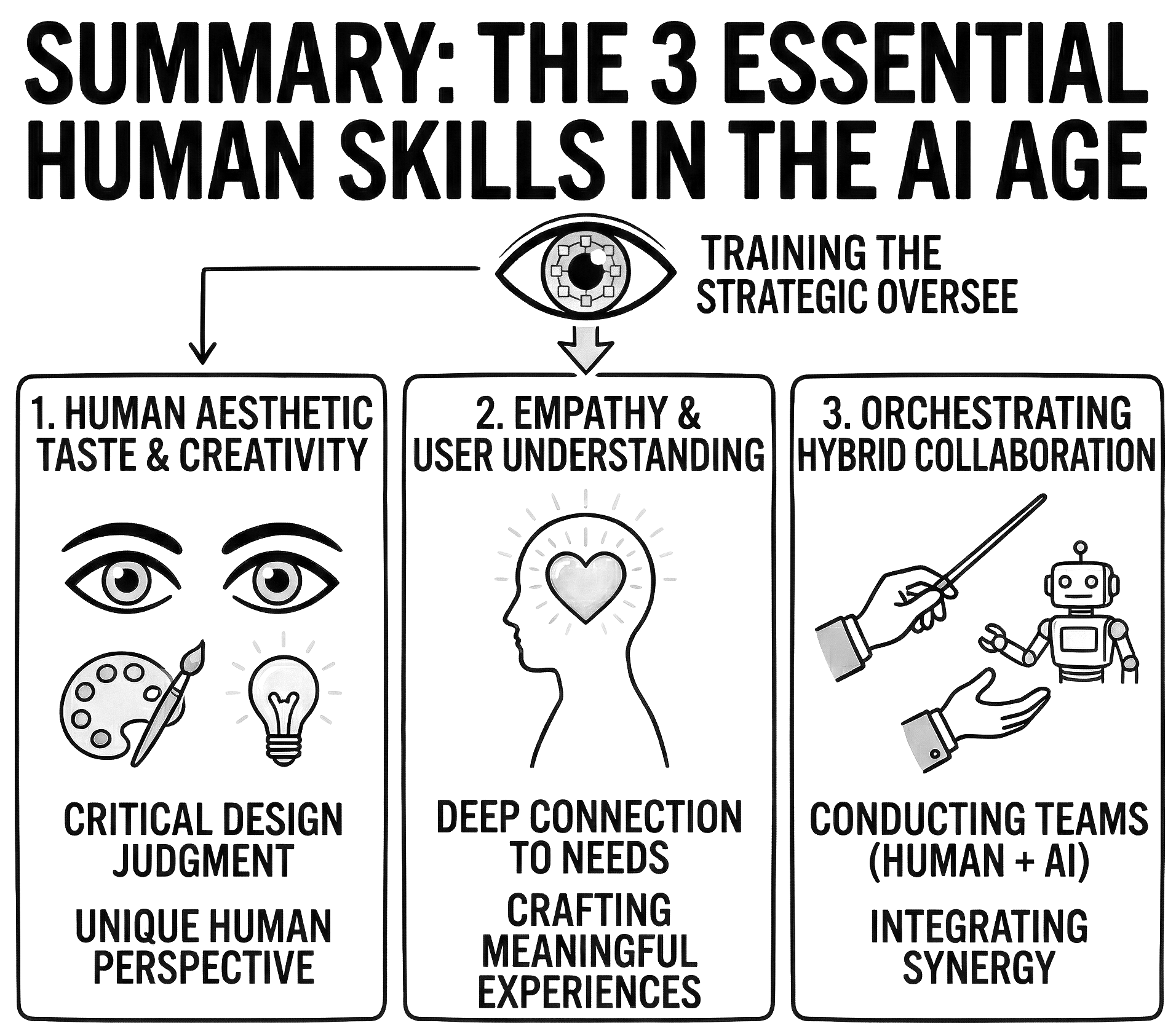
So there you have it. Three skills that will never go out of style: sharpening your unique sense of aesthetics, crafting delightful human experiences, and orchestrating teams of humans and AI agents.
The tools will keep changing. Your ability to see what matters, feel what users feel, and conduct the whole orchestra? That’s what keeps you essential.
The AI train is here. Don’t just ride it — grab the controls and drive it. The designers who do that aren’t just keeping up. They’re the ones shaping what comes next.